Welcome to Infinite Terrain! We take pride in producing high-quality tabletop scenery designed to bring your battlefields to life.
Whether you are unboxing our lightweight PLA filament prints or high-detail resin models, this guide covers everything you need to know about material properties, cleaning, priming, and painting your terrain.
1. Understanding Our Materials
We select materials based on structural needs, size, and level of detail required for the tabletop.
| Feature | PLA Filament (FDM) | Tough UV Resin |
| Best Used For | Large structures, buildings, walls, and scatter terrain. | Highly detailed scatter, small props, vehicles, and fine detail pieces. |
| Durability | High Impact: Flexible and extremely resistant to table drops. | High Detail: Rigid with crisp edge retention; handled carefully like plastic kits. |
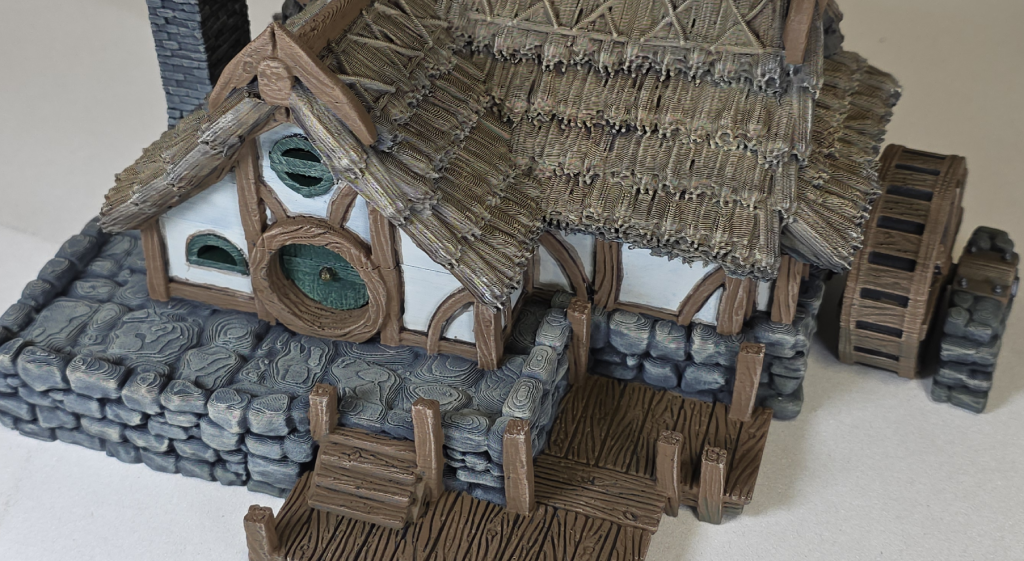
| Surface Finish | Microscopic layer lines visible upon close inspection. | Smooth, injection-moulded plastic feel with ultra-sharp details. |
| Heat Resistance | Keep away from high heat (> 50oC / 120oF) avoid hot cars. | Stable under normal ambient temperatures; keep out of direct prolonged UV light before priming. |
2. Preparing Your Models for Painting
All our terrain is inspected, cleaned, and hand-finished before dispatch. However, a small amount of quick preparation before priming guarantees the best paint adhesion.
Preparing PLA (Filament) Terrain
- Inspection: Look over the model for tiny fine strands (stringing). If present, gently scrape them away using an hobby knife or briefly pass a heat gun (or lighter) over the area for half a second.
- Sanding (Optional): PLA is tough, but if you want to minimize visible layer lines on top surfaces (like roofs), lightly rub the area with 240-400 grit sandpaper.
- Washing: Wash the piece in warm, soapy water with a drop of dish soap to remove any residual skin oils or dust, then allow it to dry completely.
Preparing Resin Terrain
- Safety First: Always work in a ventilated space when sanding resin, and wear a dust mask.
- Support Marks: We carefully remove print supports prior to shipping, but small nibs can occasionally remain. Simply shave them flush with a sharp hobby knife or sand them smooth with a fine sanding sponge.
- Washing: Give resin pieces a quick rinse in warm, soapy water to ensure any remaining processing residue is removed, ensuring your primer bonds cleanly.
3. Priming & Painting Guide
Proper priming is the single most important step when working with 3D-printed scenery. Never apply acrylic paint directly onto unprimed PLA or resin.
Step 1: Priming (The Foundation)
- Spray Primers: Use a dedicated plastic spray primer (such as Citadel, Army Painter, Vallejo, or standard Rust-Oleum Painter’s Touch).
- PLA Priming Tip: For large FDM buildings, a filler primer (available from automotive stores) works wonders – it naturally fills in fine layer lines while preserving surface detail.
- Application: Shake your spray can thoroughly for 2 minutes. Spray in light, sweeping passes from 20 – 30 cm away. Apply two thin coats rather than one heavy coat.
Step 2: Painting Techniques
Once primed, both PLA and resin can be painted using any standard hobby acrylics (Citadel, Vallejo, AK Interactive, Two Thin Coats, or standard craft acrylics).
- Drybrushing Terrain: FDM PLA terrain loves drybrushing! Heavy drybrushing over dark primers rapidly picks up stone, wood, and metal textures across large buildings.
- Washes & Contrast Paints: Acrylic washes and contrast paints work brilliantly on resin pieces due to the deep recessed detail. On PLA, apply washes over a pre-varnished or painted coat to prevent the wash from pooling into layer lines.
Step 3: Varnish & Protection
Tabletop terrain takes a beating during gaming sessions. Once your paint job is complete:
- Apply a coat of Matte or Satin Varnish (spray or brush-on) to protect against scratches, chips, and skin oils.
- Allow 24 hours for the varnish to cure fully before placing miniatures on the surfaces.
Frequently Asked Questions
Can I use superglue or plastic glue to assemble pieces?
Use Cyanoacrylate (Superglue) for both PLA and resin. Plastic cement (like Tamiya Extra Thin) will not melt PLA or resin because it is designed specifically for polystyrene plastic.
How do I store my terrain?
Store terrain in a cool, dry place. Avoid leaving PLA terrain inside hot vehicles during summer, as ambient temperatures above 50oC can cause thin PLA walls to warp.